
Traveling is supposed to widen your world—not your paperwork load! Yet, as a personal travel advisor, I’ve seen the most meticulously planned itineraries nearly derailed at the boarding gate by a single missing travel authorization or an overlooked digital visa.
The reality of international travel has shifted. We are moving away from the era of “spontaneous entry” and into the era of “digital pre-clearance.” For United States passport holders, the assumption that we can simply show up and be waved through checkpoints is no longer a safe strategy.
In 2026 and beyond, global borders are becoming biometric, algorithmic, and far more secure.
This guide is designed to be your visa roadmap. Keep it bookmarked, and let’s walk through the new rules of the road so your only focus remains the vintage of the champagne in the lounge, not the status of your paperwork.
1. Passport Health
More often than not, it’s not the visa that derails a trip, it’s the condition of the passport itself.
Passport Basics
Do you currently have a U.S. passport? If so, make sure it is not expired. Though it sounds obvious, you’d be surprised how often I hear from travelers excited to plan an international trip who don’t currently have a passport and/or haven’t yet applied for one! This is always the first and most important step.
The Six-Month Rule
Airlines are incredibly strict about this. Most countries require your passport to be valid for six months beyond your planned date of departure. If your passport expires in five months and you are heading abroad, the airline will likely deny you boarding at the check-in desk to avoid being fined by the destination government.
The Dreaded Blank Pages
This is another common pitfall for frequent flyers. Many countries require at least two consecutive, completely blank pages. If you have pages that are half-stamped or only one blank page left, you will be denied entry and potentially deported on the next available flight.
2. Key Visa Types

Before we dive into specific countries, we need to clarify the terminology. Many of my clients are surprised to learn that “visa-free” travel often requires a mandatory registration with local governments.
- Visa-Free: Technically, this means you don’t need a formal visa sticker. However, it is almost always subject to a “stay limit” (usually 90 days) and specific passport validity rules.
- ETA (Electronic Travel Authorization): This is the “lightweight” version of a visa. It’s a digital screening (like the US ESTA or the UK’s new ETA) required for travelers from visa-exempt countries. It is mandatory, and without it, you will be denied boarding and entry.
- e-Visa: A full visa applied for through a government portal. These often require you to upload passport photos or itineraries. Unlike an eTA, these are typically reviewed by a human officer.
- Visa on Arrival (VoA): Your visa is granted upon arrival at the destination airport. While it sounds convenient, it can mean standing in a 90-minute line after a 14-hour flight. In places like Bali, I always suggest the e-VoA (electronic visa on arrival) to bypass this friction.
- Schengen Travel or The 90/180 Rule: This is the golden rule of European travel. Schengen is a European security region comprised of 25 EU countries and 4 non-EU countries. You can remain in any Schengen country for 90 days within any 180-day period. With new digital systems coming online, the days of “winging it” with your math are over. If you are planning an extended stay in Europe, I recommend using the Schengen app to track your travel days.
2. Big Shifts in 2026
London, Paris, and Rome are the most popular European cities for first-time travelers. Even if you’re a regular visitor to these destinations, this information is going to be valuable to you.
The UK’s Electronic Travel Authorization (ETA)

Starting on February 25, 2026, the United Kingdom began strictly enforcing its ETA. This allows travelers to visit the UK for up to 6 months for tourism, visiting family and friends, on a business trip, or for short-term study.
Every US citizen, regardless of age, must hold a valid UK ETA before they even head to the airport. The UK ETA will be valid for 2 years, or until your passport expires. You can apply online or work with a trusted travel advisor.
The EU’s Entry/Exit System (EES)
The EES replaces the traditional manual stamping of passports with biometric records (facial scans and fingerprints) for non-EU nationals traveling to the European Union on short stays. By April 10, 2026, the European Union’s Entry/Exit System (EES) will be fully operational across 25 European Union countries.
This digital system is designed to automatically detect travelers who overstay their welcome. If you spend 91 days in the European Union area, the system will flag you instantly upon your next entry or exit point. Currently, the penalty for overstaying is monetary fines and a 1-5-year reentry ban.
ETIAS
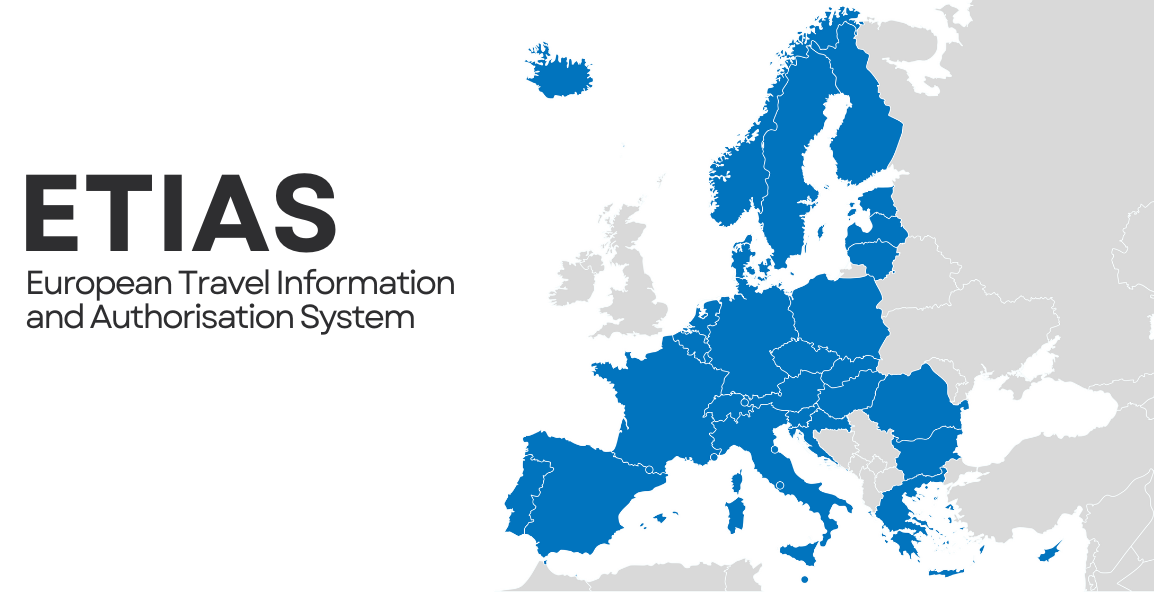
The European Travel Information and Authorisation System authorization will likely launch toward the end of 2026. It is a mandatory pre-travel check (similar to the US ESTA) for travelers who do not currently need a visa to enter Europe.
Once live, you will not be allowed to board a flight to the EU without it. Please note that the ETIAS visa waiver rollout has been rescheduled multiple times; there is a good chance it will be postponed yet again in 2026.
3. Notable Visas to Be Aware Of
Thailand: The New Digital Arrival Card (TDAC)

Frequently cited as the #1 choice in Southeast Asia for American travelers, Thailand has streamlined its entry requirements with a new digital step. Starting May 1, 2025, and continuing through 2026, all foreign nationals must complete the Thailand Digital Arrival Card (TDAC). This must be done electronically 3 days before arrival.
Bali & Indonesia (e-VOA)

Bali remains one of the most sought-after escapes, but it now requires a “double-tap” of paperwork. I recommend applying for your Electronic Visa on Arrival (e-VOA) 14 days before departure (approx. $32 USD).
You’ll also be expected to pay a local tourism levy of IDR 150,000 (approx. $10 USD) intended for cultural and environmental preservation. Use the official “Love Bali“ portal to avoid scams.
The Maldives (VOA)

The Maldives is a “Visa on Arrival” destination, which sounds easy enough. However, every traveler must submit a Traveler Declaration via the IMUGA portal within 96 hours of arrival.
While the IMUGA form is completely free, many third-party “scam” sites will try to charge you $50–$100 to complete it. Only use the official .gov.mv site.
Japan (e-Visa)

Japan has an e-Visa system, and the most important thing for you to know is the “Visa Issuance Notice“ requirement. If you are using a digital authorization, Japan does not accept PDFs, screenshots, or printed copies.
You must be able to log into the official portal on your smartphone and display a live notice to the immigration officer.
Singapore (SGAC)

Singapore is the gold standard for efficient borders, but it is becoming more strict about pre-arrival data. Starting January 30, 2026, the Immigration & Checkpoints Authority (ICA) began issuing “No-Boarding Directives” (NBD).
This means if you haven’t completed your mandatory (and free) SG Arrival Card (SGAC) at least three days before you fly, the airline may be prohibited from allowing you to board.
Australia & New Zealand (ETA)

The South Pacific has moved almost entirely to mobile-based entry for U.S. citizens. In Australia, you cannot apply for your ETA (Subclass 601) on a website; it must be done through the “Australian ETA” app.
The app uses your phone’s NFC reader to scan the chip in your passport and takes a live biometric photo of your face. There is a nominal AUD 20 service fee, and most are approved within 12 hours, but if your application is flagged for manual review, it can take weeks.
Similarly, in New Zealand, the NZeTA is mandatory. It is valid for two years, and you’ll pay a sustainability levy (the IVL) at the same time. I recommend applying at least 72 hours before departure.
Middle East Tourist Visa (VoA)

If you are flying to the Middle East on Emirates, Etihad, or Qatar Airways, you have access to some of the world’s most sophisticated transit programs. U.S. citizens are eligible for visa-free entry or visa-on-arrival for short stays in the UAE and Qatar, making these hubs perfect for a “two-for-one” holiday.
I wrote a blog that covers these mini vacation programs in detail.
Important Note for Transit Travelers: Even if you’re only transiting and not exiting the airport, your passport must still have at least six months of validity. Hubs like Dubai and Doha are notorious for enforcing this rule even for “airside” transfers.
Chinese Visas

Hong Kong remains a seamless gateway, requiring only one month of passport validity beyond your stay and offering a generous 90-day visa-free stay for US citizens.
If your journey takes you through Mainland China, you may be eligible for either the 24-hour or 240-hour visa-free transit.
This allows you to enter cities like Shanghai or Beijing for up to ten days without a formal visa, provided you have a confirmed ticket to a third country (Hong Kong counts as a third country for this rule). It’s a fantastic way to see the Great Wall or the Bund without the hassle of a full consular visa application.
Your International Travel Checklist
Before you commit to that non-refundable bookinginternational destination, run this quick audit:
- Passport in Hand: Do I currently own a passport? If not, you can apply for one on the US State Department’s website.
- Passport Expiration: Is my passport expired? If so, you can renew it on the US State Department’s website.
- Passport Validity: Is my passport valid for 6+ months from today?
- Passport Blank Pages: Do I have at least 2 completely blank pages?
- Digital Entry: What digital documents are required to travel to my destination?
- The “Official” Test: Am I on a .gov or .gov.xx website? If the site looks like a blog but asks for $100 for a “free” form, it’s a scam.
- Transit Check: If I have a layover, do I need a digital document to transit through? Do I need to go through security and/or clear customs (e.g., travel through any Schengen airport such as Frankfurt)
The Value of a Personal Travel Advisor
Recently, I had a client who got to the boarding gate and was told they needed to provide a hard copy of their visa because the gate agent wouldn’t accept an electronic copy. This nearly derailed their entire South African safari and serves as a good example of why you need to stay on top of all these visa rules and passport requirements.
But this is more easily said than done, and if you’d prefer not to deal with the hassle of it all, that’s where the services of a personal travel advisor can be useful.
As a luxury travel advisor, my role is not only to design incredible trips for my clients. I also help them also avoid preventable travel issues related to travel authorizations or digital visas.
If you’re planning a trip this year and you’d like my travel support services, one of the perks is that I will review your passport and visa requirements. This is one of the most important steps in the entire trip-planning process, and it can make the difference between starting your trip on the right foot and encountering avoidable complications before your journey even begins. Get in touch today for a complimentary consultation!