
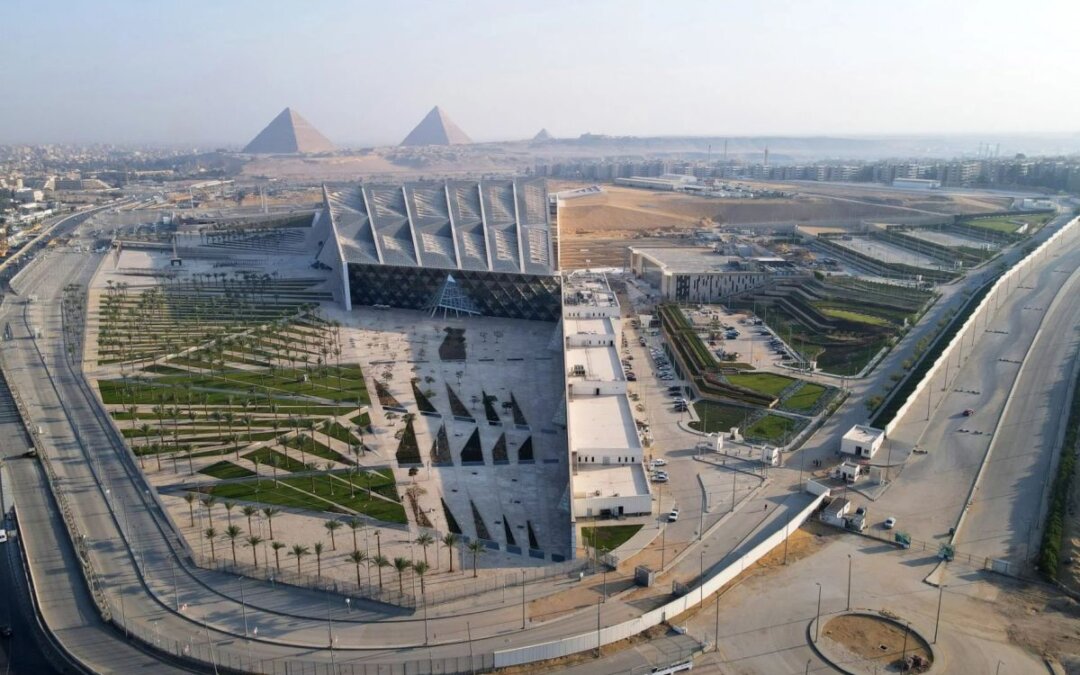
You step into a cavernous gallery and the scale hits you before anything else: soaring ceilings, ranks of monumental statuary, and cases of gold that catch the light like living things. Perched just above the Giza plateau, the Grand Egyptian Museum is a new kind of archaeological campus — spacious, quietly modern, and squarely focused on context.
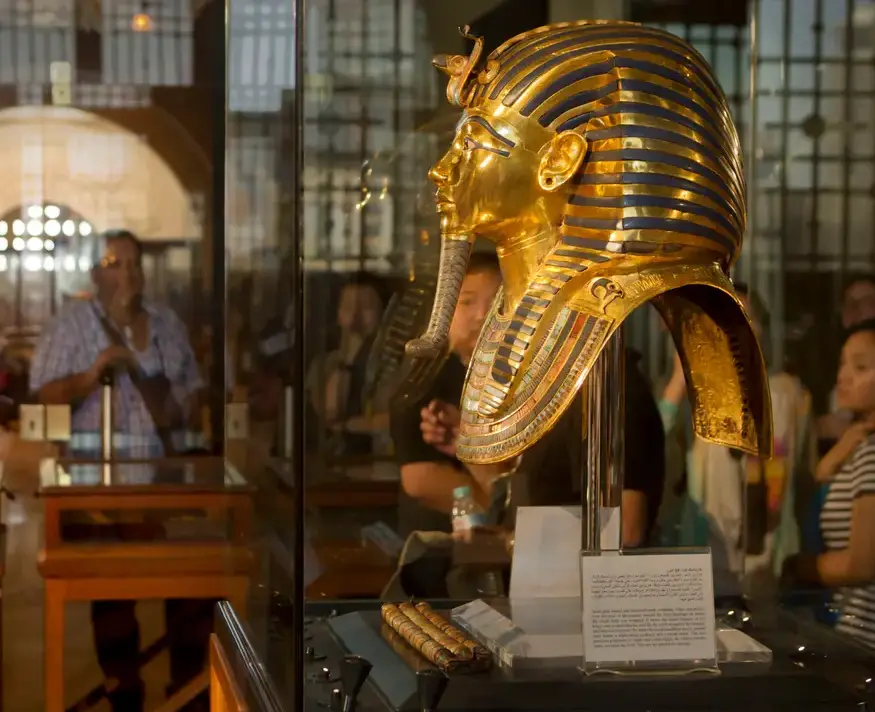
At its centre are the Tutankhamun displays, presented together for the first time since their discovery. Around them sit colossal statuary, reconstructed royal boats, and open conservation studios where restorers work in public view. Below, I’ll walk through what GEM now offers, the best ways to see its highlights, and how to fold a museum visit into a smooth, comfortably paced Egypt itinerary.
What the Grand Egyptian Museum Is — At a Glance
- Scale and footprint. GEM is a very large complex near Giza, covering roughly 470,000 square metres, with about 24,000 square metres devoted to permanent galleries.
- Collection size. Reports indicate the museum displays approximately 50,000 objects drawn from national collections and recent transfers, so the galleries feel both dense and carefully curated.
- Tutankhamun reassembled. For the first time, the tomb’s full assemblage is presented in dedicated halls, allowing a more complete, contextual reading of Tutankhamun’s burial and material culture.
- Monumental sculpture and royal displays. Large-scale pieces, including the relocated Ramesses II group, are sited to be experienced at scale — seen from a distance and examined closely.
- Conservation, education and tech. Public conservation studios, education spaces and mixed-reality experiences make the museum a working research centre as much as a showpiece.
Practical Visiting Tips
Opening hours & ticketing
Book tickets only through the official portal (visit-gem.com). The museum uses timed-entry slots, so reserve a date and start time well in advance; popular morning slots can sell out. The complex typically opens around 08:30 with galleries from 09:00, and some days have extended hours — always check the site for the exact schedule the day before you go.
Allow 2–4 hours to see the highlights — Tutankhamun, the Grand Hall and Khufu’s boats — and plan a half day if you want the conservation lab, temporary exhibitions and a relaxed café break. Early gallery slots are the best choice: mornings are quieter, and the light in the Tutankhamun halls is gentler for photography. If you are combining GEM with the Giza Plateau, do GEM first and save the pyramids for late afternoon or sunset; the sequence gives you cooler temperatures and better light for photos.
Accessibility & visitor facilities
Expect airport-style security and bag checks on arrival. Travel light: a small day bag that meets the museum’s size rules speeds entry. Personal photography is usually allowed in public galleries but flash, tripods, monopods and external lighting are prohibited; some rooms may ban photos entirely and professional kits typically require prior permission. Lockers are available where needed.
The GEM is built for easy circulation: ramps and elevators connect major levels and facilities include restrooms, cloakrooms, prayer rooms, cafés and a shop. Check the museum’s accessibility page before you travel for wheelchair services, Braille guides and sensory-friendly options.
Transfers between the museum and the plateau normally take 20–40 minutes, depending on traffic; allow 60–90 minutes of buffer when moving in and out of central Cairo. Use a trusted private transfer rather than ad hoc taxis — drivers familiar with GEM and Giza routings save time and stress. Confirm pickup points in advance and keep local contact numbers handy.
If you prefer not to manage these logistics yourself, as your personal travel advisor, I will arrange transfers, timing, and local contacts so you simply turn up and begin exploring.
Nearby & Complementary Sites to Combine with GEM
Giza Plateau & the Sphinx
Why it pairs: GEM reframes objects within their landscape; Giza returns you to the place those objects once served. Seeing Tutankhamun’s material culture and the museum’s colossal sculpture, then walking the plateau, gives a powerful spatial and chronological perspective.
Practical tip: Visit GEM in the morning and arrive at Giza in the late afternoon for cooler temperatures and dramatic light for photos.
Saqqara & Memphis
Why it pairs: Saqqara and Memphis show the earlier chapters of Egyptian funerary practice that GEM’s galleries explain — from mastabas to step pyramids to royal tombs. Combining the site and the museum helps you follow the story in sequence rather than as disconnected highlights.
Practical tip: Treat Saqqara as a half-day visit, either before GEM (to set context) or immediately after (to move from objects to place).
The Egyptian Museum (Tahrir) — old museum vs. GEM
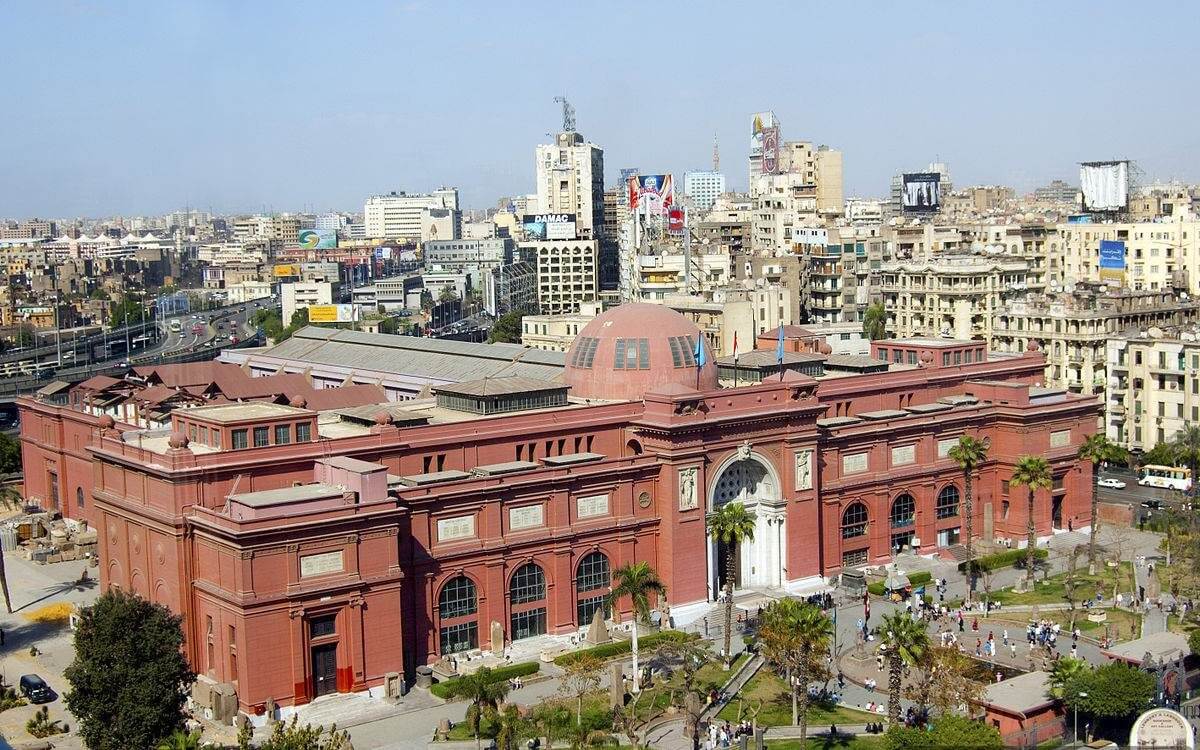
Why it pairs: Tahrir retains the atmosphere of a 20th-century national collection and houses objects and displays of historical interest; GEM offers a re-staged, conservation-driven narrative. Visiting both lets you compare museum histories and appreciate how curatorial practice has evolved.
Practical tip: If time is limited, prioritize GEM for depth; add a focused 60–90 minute stop at Tahrir if you want the classic-museum experience.
National Museum of Egyptian Civilization (NMEC) / Royal Mummies
Why it pairs: NMEC’s thematic displays and the Royal Mummies Hall bridge GEM’s object-led galleries and the public, ceremonial aspect of Egypt’s rulers. The contrast between NMEC’s narrative framing and GEM’s conservation focus is illuminating.
Practical tip: Book NMEC’s mummy tour in advance and pair it with GEM on a separate half-day to avoid an overpacked morning.
Luxor & the Valley of the Kings
Why it pairs: GEM foregrounds conservation and material histories that resonate when you then stand in Luxor’s temples and tombs; restored objects at GEM come alive on-site in Upper Egypt.
Practical tip: Allow at least one buffer day when travelling from Cairo to Luxor so you can shift pace and adjust to the local climate and rhythm.
Why the GEM Changes the Egypt Visit
The Grand Egyptian Museum does more than add a stop to Cairo’s map — it reshapes how we understand and experience Egypt.. By bringing huge collections together, reuniting Tutankhamun’s treasures and showing monumental sculpture at scale, the GEM turns scattered objects into a continuous, easily read story. Public conservation labs and interactive displays make preservation part of the visit, shifting attention from passive viewing to investigation and context.
That shift has practical consequences. Plan for longer museum blocks rather than a hurried hour; build buffer days so you can pair site visits with conservation or archival viewings; and book the museum first, then schedule Giza, Saqqara, or a Luxor leg around those timed slots and local traffic. In short, let the GEM be the narrative anchor of your itinerary, not an afterthought.
If you want a trip that treats the museum as the story’s centrepiece — comfortable, richly contextual and thoughtfully paced — I can design it for you. I create itineraries that respect the GEM’s new priorities and the rhythms of Egypt, so you arrive prepared and free to enjoy what matters. Contact me for a complimentary consultation.